In today’s fast-paced business environment, companies are no longer competing only on sales volume, but on how efficiently they manage their operations and financial data. This is why many decision-makers are searching for what is ERP system and how it can transform accounting and business management into a single, connected process.
Why Companies Are Searching for What Is ERP System Today
Many businesses struggle with disconnected systems, manual accounting processes, and delayed reporting. These challenges make it difficult to control costs or scale operations. Understanding what is ERP helps companies realize how a unified solution can eliminate inefficiencies and provide real-time insights across all departments.
Common Accounting Problems Solved by What Is ERP System
Traditional accounting tools often operate in isolation. This leads to data duplication, human errors, and inconsistent reports. An ERP system solves these issues by centralizing information and automating workflows, allowing accounting teams to work faster and more accurately.
What Is ERP System? A Simple Explanation
When people ask what is ERP, they are referring to Enterprise Resource Planning, a technology designed to integrate all core business processes into one platform.
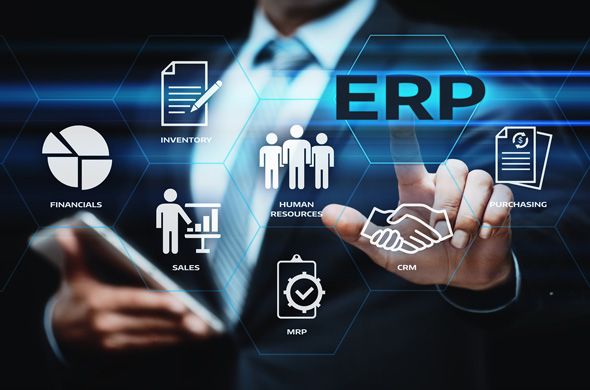
Simply put, Enterprise Resource Planning connects accounting, sales, purchasing, inventory, and human resources into a single system, eliminating the need for multiple standalone tools.
How Does What Is ERP Work Inside Companies?
An ERP system works through a centralized database. When a transaction is recorded—such as a sale or expense—it automatically updates accounting records, inventory levels, and financial reports. This automation ensures data accuracy and saves valuable time.
Difference Between What Is ERP and Traditional Accounting Software
Traditional software focuses mainly on bookkeeping. In contrast, understanding what is ERP means recognizing that ERP goes beyond accounting by supporting operational management, analytics, and long-term planning.
Core Components of What Is ERP System
Most ERP solutions include essential modules such as accounting, sales management, inventory control, and reporting. These components work together within a unified ERP framework, ensuring consistency across all business operations.
Accounting is the backbone of any ERP solution. With an ERP accounting module, businesses gain accurate financial statements, automated journal entries, and compliance-ready reports—all in real time.
Sales, Purchases, and Inventory Integration in ERP Systems
One major advantage of an ERP system is seamless integration. Sales orders automatically affect inventory, while purchases update supplier records and financial accounts. This integration reduces delays and errors.
Key Benefits of What Is ERP System for Growing Businesses
Growing companies benefit greatly from ERP because it supports ERP expansion without disrupting existing workflows. As operations grow, new modules and users can be added easily.
How What Is ERP Reduces Errors and Improves Accuracy
Manual data entry is a common source of mistakes. By automating transactions and workflows, ERP systems significantly reduce accounting errors and enhance data reliability.
ERP System vs Traditional Accounting Systems: Which Is Better?
When comparing enterprise system vs ERP, ERP stands out as a holistic solution that integrates operations and finance, unlike basic accounting tools that operate in silos.
When Do You Need What Is ERP System Instead of Basic Accounting Software?
If your business handles complex operations, multiple departments, or large volumes of transactions, it’s time to move beyond basic tools and adopt an ERP system.
How to Choose the Right What Is ERP System for Your Business
Choosing the right ERP solution depends on business size, industry, and growth plans. Look for flexibility, scalability, and local compliance support.
ERP System Egypt: Why Local Expertise Matters
For businesses operating in ERP system Egypt, local regulations and tax requirements are critical. A localized ERP solution ensures compliance and smoother implementation.
Why Salis Offers the Best What Is ERP Solution
Salis provides a comprehensive ERP solution tailored for businesses seeking reliable accounting and operational control. With flexible modules, intuitive design, and strong local support, Salis stands out as a trusted ERP provider.
Salis offers advanced reporting, scalable architecture, and seamless integration across departments. It supports business growth while maintaining data accuracy and control.
How ERP Supports Long-Term Business Growth
ERP systems enable data-driven decisions, cost optimization, and efficient resource allocation, making them essential for sustainable growth.
What Is ERP and Digital Transformation
ERP is the foundation of digital transformation. It replaces paper-based processes and disconnected tools with a unified digital environment.
What Is ERP System and Financial Planning
ERP provides real-time financial insights that support budgeting, forecasting, and strategic planning.
Frequently Asked Questions About What Is ERP System
Businesses often ask what is ERP, how it differs from accounting software, and whether it’s worth the investment. The answer lies in ERP’s ability to unify processes and drive efficiency.
Get Started Today with What Is ERP for Smarter Accounting
Adopting an ERP system is not just a technology upgrade—it’s a strategic decision. With solutions like Salis, businesses can manage accounting, operations, and growth confidently.