


When business owners search for what is ERP, they are usually looking for a clear explanation of how companies manage operations efficiently. ERP stands for Enterprise Resource Planning, a system designed to integrate all core business processes into one unified platform.
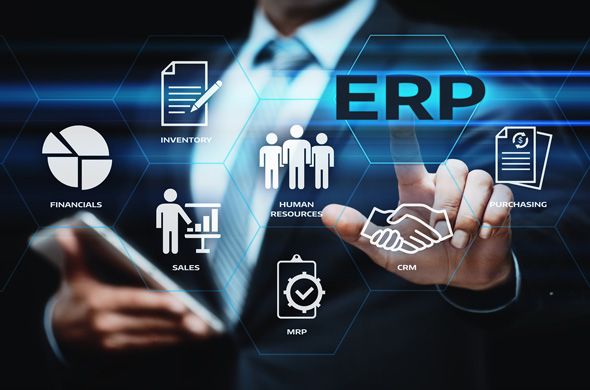
Instead of using separate tools for accounting, inventory, sales, and HR, ERP connects everything in a single ERP system. This integration allows companies to improve efficiency, reduce errors, and gain real-time visibility into their operations.
In today’s competitive environment, understanding what is ERP is essential for any organization aiming to grow and scale sustainably.
How Does ERP Work? Understanding the Core Concept of ERP Systems
To fully understand what is ERP system, it’s important to know how it works behind the scenes. ERP relies on a centralized database where all departments share the same information.
When a transaction occurs in one department, it automatically updates across the system. For example, a sales order instantly affects inventory and financial records. This is what makes ERP software far more powerful than traditional standalone tools.
This centralized approach eliminates data duplication and ensures accuracy across the organization.

Key Benefits Explained: Why Businesses Choose ERP Systems
Companies adopt ERP solutions because of the measurable benefits they provide. Understanding what is ERP also means understanding the value it delivers.
Key benefits include:
- Improved operational efficiency
- Real-time reporting and analytics
- Reduced manual work and errors
- Better collaboration between departments
- Scalable systems that grow with the business
These advantages make Enterprise Resource Planning a long-term strategic investment rather than just a software purchase.
How ERP Improves Efficiency, Accuracy, and Business Control
One of the biggest strengths of ERP is automation. By automating routine tasks, ERP reduces human error and saves time.
With a modern ERP system, managers gain full control over business data. Financial performance, inventory levels, and operational KPIs can be monitored in real time. This level of visibility helps leadership make faster and more accurate decisions.
This is why companies that truly understand what is ERP often see significant performance improvements after implementation.
What Is ERP Used For? Common Business Applications
Many people ask what is ERP used for, and the answer depends on the industry. ERP systems are used in manufacturing, retail, healthcare, logistics, education, and professional services.
Common applications include:
- Financial management and accounting
- Inventory and supply chain control
- Human resources and payroll
- Sales and customer management
- Procurement and vendor tracking
No matter the sector, ERP brings structure and clarity to complex operations.

ERP vs Traditional Business Systems: What Is the Difference?
A common comparison is enterprise system vs ERP. Traditional enterprise systems often operate in silos, where each department uses its own software.
ERP, on the other hand, integrates all functions into one system. This integration improves data accuracy and eliminates communication gaps. When comparing enterprise system vs ERP, ERP clearly offers more flexibility, scalability, and long-term value.
Understanding this difference helps businesses choose the right technology strategy.
Types of ERP Systems and How to Choose the Right One
ERP systems come in several types, including cloud-based, on-premise, and hybrid solutions. Each type serves different business needs.
Cloud ERP offers flexibility and lower upfront costs, while on-premise ERP provides full control over infrastructure. Modern ERP software often supports hybrid models to balance security and scalability.
Choosing the right ERP system depends on business size, industry, and growth plans.
Who Needs ERP? Which Businesses Benefit the Most?
ERP is not only for large enterprises. Small and medium-sized businesses also benefit greatly from ERP systems.
If a company struggles with manual processes, disconnected systems, or slow reporting, it likely needs ERP. Understanding what is ERP helps businesses recognize when it’s time to upgrade their operational infrastructure.
ERP supports businesses at every growth stage by providing structure and scalability.

Common ERP Implementation Challenges and How to Avoid Them
Despite its benefits, ERP implementation can face challenges such as resistance to change, data migration issues, or lack of training.
These challenges can be avoided by:
- Choosing the right ERP provider
- Setting clear business goals
- Training employees properly
- Planning implementation phases carefully
A successful ERP project starts with understanding what is ERP system and aligning it with business objectives.
What Is ERP in Practice? How Salis Delivers a Powerful ERP Solution
Understanding what is ERP becomes clearer when seeing it in practice. Salis provides a modern ERP solution that integrates finance, operations, inventory, and HR into one intelligent system.
Salis focuses on usability, automation, and real-time reporting. Its flexible architecture makes it suitable for businesses of different sizes and industries, especially those seeking a reliable ERP system Egypt.
Why Salis Is the Smart ERP Choice for Growing Businesses
Among many ERP providers, Salis stands out due to its advanced features and local market understanding. It offers scalable Enterprise Resource Planning solutions designed to support long-term growth.
Salis delivers:
- Easy-to-use dashboards
- Accurate financial and operational reports
- Full system integration
- Compliance with regional business requirements
For companies exploring what is ERP and looking for a trusted solution, Salis provides both technology and expertise.

ERP System in Egypt: Why Localized ERP Solutions Matter
The demand for ERP system Egypt has increased significantly due to digital transformation and regulatory requirements.
Localized ERP solutions like Salis help businesses comply with regional regulations while maintaining global best practices. This balance is critical for sustainable growth in emerging markets.
What Is ERP and Why It Matters for Your Business
So, what is ERP? It is the backbone of modern business management. ERP integrates processes, improves efficiency, and empowers decision-makers with real-time data.
With advanced solutions like Salis ERP, businesses can move beyond manual operations and build a strong foundation for growth. Understanding and implementing Enterprise Resource Planning is no longer optional—it’s a competitive necessity.