


What Is Enterprise Resource Planning?
Enterprise Resource Planning is a comprehensive business management approach that integrates all core operations into a single, unified system. When decision-makers search for what is ERP or erp what is, they are usually looking for a solution that connects accounting, inventory, human resources, sales, procurement, and customer data in one platform.
In simple terms,ERP enables organizations to replace disconnected tools with a centralized system that improves efficiency, accuracy, and visibility across all departments. Instead of managing data separately, businesses gain real-time insights and full operational control.
Why Enterprise Resource Planning Is Essential for Modern Businesses
Today’s competitive markets demand speed, accuracy, and adaptability. This is why Enterprise Resource Planning is no longer optional. Companies using manual workflows or fragmented software struggle with inefficiencies, data duplication, and slow decision-making.
Modern organizations rely on ERP systems to:
- Eliminate operational silos
- Automate routine tasks
- Improve collaboration
- Reduce operational costs
- Support data-driven strategies
With the right erp system, businesses gain the flexibility needed to scale and adapt to changing market demands.

How Enterprise Resource Planning Solves Common Business Challenges
Many organizations face challenges such as inconsistent reporting, inventory mismanagement, and delayed financial insights. ERP directly addresses these problems by creating a single source of truth.
By implementing a centralized erp system, companies can:
- Track financial performance in real time
- Maintain accurate inventory levels
- Improve customer service
- Enhance workforce productivity
These benefits explain why Enterprise Resource Planning has become the foundation of sustainable business growth.
Key Benefits of Enterprise Resource Planning for Growing Companies
Growing businesses require structure without complexity. Enterprise Resource Planning provides this balance by offering scalable and modular solutions.
Key benefits include:
- Streamlined operations across departments
- Improved financial transparency
- Faster and more accurate reporting
- Enhanced compliance and risk control
- Better forecasting and planning
Organizations that adopt ERP early are better positioned to grow efficiently and remain competitive.
Enterprise Resource Planning vs Traditional Business Systems
Traditional business systems often rely on spreadsheets, isolated software, or manual workflows. These methods create inefficiencies and limit visibility.
In contrast, ERP integrates all processes into one platform. Unlike legacy tools, modern ERP systems offer automation, analytics, and scalability. This shift allows businesses to move from reactive management to proactive strategic planning.

Core Modules of Enterprise Resource Planning Explained
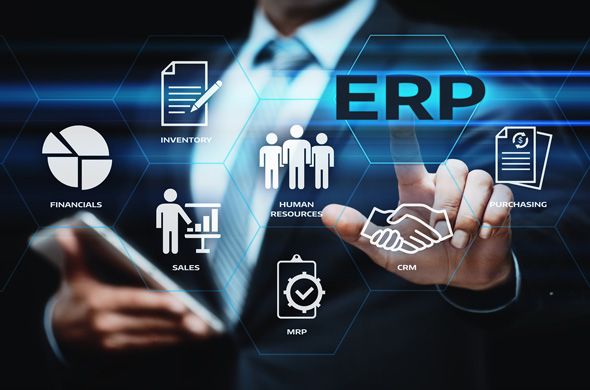
A standard Enterprise Resource Planning solution includes several interconnected modules, such as:
- Financial management and accounting
- Inventory and warehouse management
- Human resources and payroll
- Sales and customer relationship management
- Procurement and supplier management
Each module works together within the same system, ensuring data accuracy and operational consistency. This modular structure makes ERP adaptable to various industries.
How Enterprise Resource Planning Improves Decision-Making and Efficiency
One of the strongest advantages of ERP is real-time access to data. Managers no longer wait for reports or rely on outdated information.
With centralized dashboards and analytics, an erp system enables leaders to:
- Monitor KPIs instantly
- Identify performance gaps
- Optimize resource allocation
- Make faster, more informed decisions
This capability transforms data into actionable insights that directly impact profitability.
Who Needs Enterprise Resource Planning? Industries and Use Cases
Enterprise Resource Planning is suitable for businesses across multiple sectors, including manufacturing, retail, distribution, healthcare, education, and professional services.
In markets like erp egypt, companies increasingly rely on ERP to manage complex operations while staying compliant with local regulations. Organizations of all sizes benefit from ERP, whether they operate a single branch or multiple locations.
Cloud vs On-Premise Enterprise Resource Planning Systems
When choosing Enterprise Resource Planning, businesses must decide between cloud-based and on-premise deployment.
Cloud ERP offers flexibility, lower upfront costs, and remote accessibility, while on-premise systems provide full control over infrastructure. Modern ERP systems often support hybrid models, allowing companies to choose what best fits their needs and growth plans.
Common Challenges When Implementing ERP (And How to Avoid Them)
Despite its advantages, implementing Enterprise Resource Planning can present challenges such as resistance to change, data migration issues, or inadequate training.
These challenges can be minimized by:
- Choosing a flexible ERP provider
- Ensuring proper onboarding and training
- Aligning system features with business goals
A well-planned implementation ensures that the ERP system delivers long-term value.
How to Choose the Right Enterprise Resource Planning System for Your Business
Selecting the right ERP solution requires careful evaluation. Businesses should consider:
- System scalability
- Ease of use
- Industry-specific features
- Integration capabilities
- Vendor support and expertise
Solutions built on advanced integrated solutions provide higher automation, better performance, and smoother expansion over time.

Enterprise Resource Planning Cost: What to Expect and How to Plan Your Budget
The cost of Enterprise Resource Planning varies depending on features, deployment type, and business size. While initial investment may seem significant, the long-term ROI often outweighs the cost.
By reducing inefficiencies and improving productivity, an ERP system becomes a strategic investment rather than an expense.
Enterprise Resource Planning Implementation Checklist for Businesses
Before implementing ERP, businesses should:
- Define clear objectives
- Prepare internal teams
- Clean and organize data
- Choose a reliable ERP provider
- Plan training and support
Following this checklist ensures a smoother transition and faster adoption.
Why Salis Is a Smart Choice for ERP
Among the many ERP providers available, Salis stands out by delivering scalable and user-friendly Enterprise Resource Planning solutions tailored to modern businesses.
Salis focuses on:
- Seamless system integration
- Real-time analytics
- Customizable modules
- Compliance with local and regional requirements
- Advanced integrated solutions designed for long-term growth
For companies searching for erp system egypt, Salis offers a powerful platform that combines flexibility, performance, and reliability.
Transform Your Business with Enterprise Resource Planning
Enterprise Resource Planning has become the backbone of efficient, data-driven organizations. By integrating all operations into a single system, businesses gain clarity, control, and scalability.
With its modern architecture and advanced capabilities, Salis ERP empowers organizations to unlock the full potential of ERP and build a sustainable, competitive future.